Posts with this logo use


January 26, 2026
Categorifying Riemann’s Functional Equation
Posted by John Baez

David Jaz Myers just sent me some neat comments on this paper of mine:
and he okayed me posting them here. He’s taking the idea of categorifying the Riemann zeta function, explained in my paper, and going further, imagining what it might mean to categorify Riemann’s functional equation
where is the ‘completed’ Riemann zeta function, which has an extra factor taking into account the ‘real prime’:
My paper categorified the Euler product formula that writes the Riemann zeta function as a product over the usual primes:
I had nothing to say about the real prime.
But it’s the functional equation that sets the stage for focusing on zeroes of the Riemann zeta function with … and then the Riemann Hypothesis! So it’s worth thinking about.
January 6, 2026
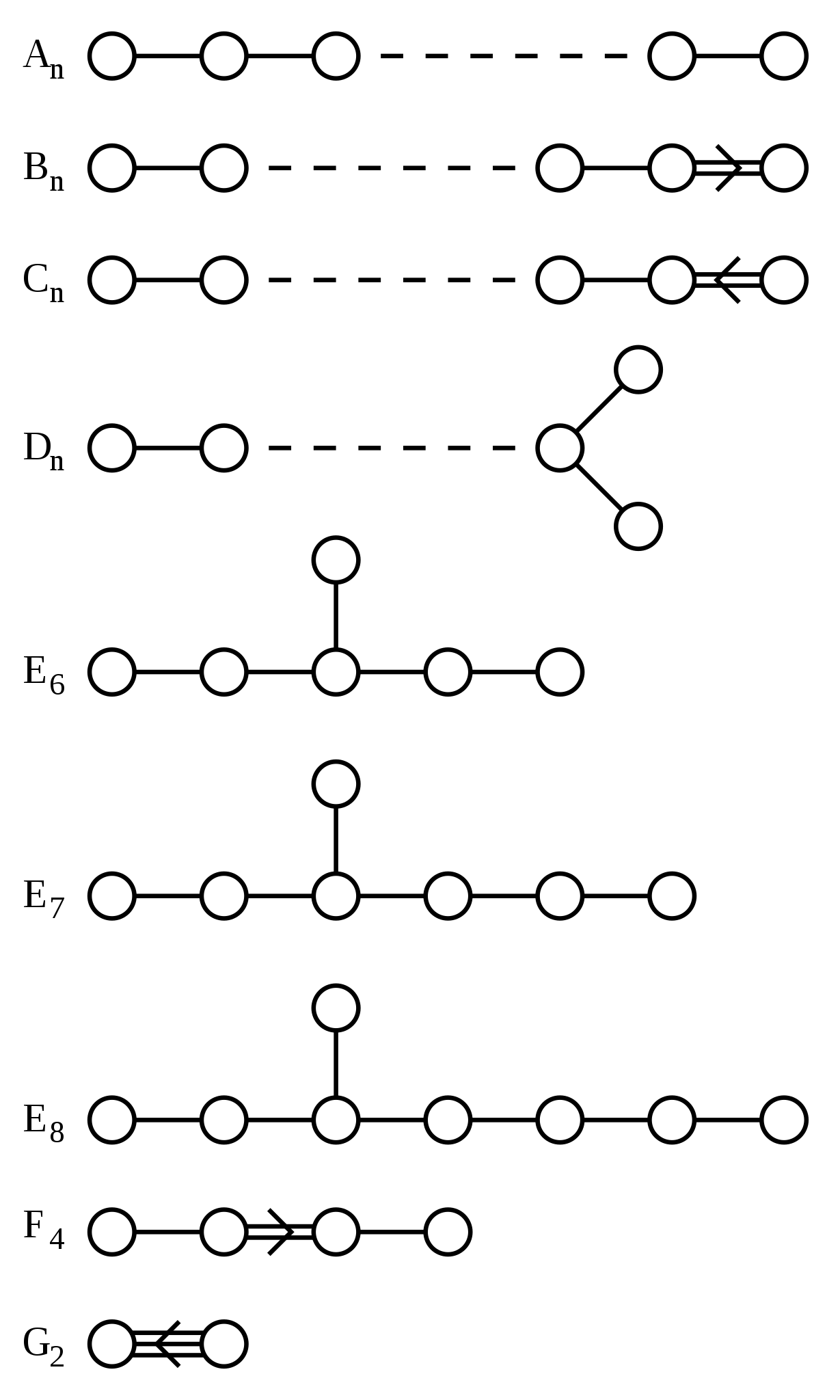
Coxeter and Dynkin Diagrams
Posted by John Baez
Dynkin diagrams have always fascinated me. They are magically potent language — you can do so much with them!