 Posts with this logo use


April 30, 2008
Questions on 2-covers
Posted by David Corfield

The following may well have been talked about by John in his lectures but I didn’t see it explicitly there, so I’ll ask.
Since at level 1, we have
A Galois connection between subgroups of the fundamental group and path-connected covering spaces of X for path-connected . A universal covering space is simply connected.
should we not expect a level 0 analogue:
A ‘connection’ between subsets of the set of connected components and covering spaces of whose locally constant fibres are either empty or ?
This puts these latter ‘covering spaces’ into correspondence with the poset of subsets of , so that the universal covering space with truth valued fibres is the empty set.
So do we have then:
A Galois 2-connection between sub-2-groups of the fundamental 2-group and path-connected 2-covering spaces (with groupoid fibres) of X for path-connected , a universal 2-covering space being 2-connected?
So, if we think of a nice space with nontrivial first and second homotopy, say the loop space of the 2-sphere, do we have a correspondence between 2-covering spaces and sub-2-groups of its fundamental 2-group? And is there a universal 2-connected 2-cover with 1- and 2-homotopy killed off?
April 29, 2008
Returning to Lautman
Posted by David Corfield
I mentioned in an earlier post that Albert Lautman had a considerable influence on my decision to turn to philosophy. I recently found out that his writings have been gathered together and republished as Les mathématiques, les idées et le réel physique, Vrin, 2006, a copy of which arrived through the post the other day. It’s remarkable how much contemporary mathematics Lautman covers – class field theory, algebraic topology, analytic number theory, etc.
At the same time as I was reading Lautman I became excited by category theory, via Colin McLarty’s Uses and Abuses of the History of Topos Theory, British Journal for the Philosophy of Science 1990 41(3):351-375, and Saunders Mac Lane’s Mathematics: Function and Form, and noticed an affinity with Lautman’s thinking, supported by a remark made by Jean Dieudonné in his 1977 Preface:
La “montée vers l’absolu” qu’il y discerne, et où il voit une tendance générale, a pris en effet, grâce au langage des catégories, une forme applicable à toutes les parties des mathématiques: c’est la notion de ‘foncteur représentable’ qui joue aujourd’hui un rôle considérable, tant dans la découverte que dans la structuration d’une théorie. (p. 36)
That Lautman worked with Claude Chevalley and Charles Ehresmann may not be unconnected.
April 28, 2008
Dual Formulation of String Theory and Fivebrane Structures
Posted by Urs Schreiber
We would like to share the following:
Hisham Sati, U.S. and Jim Stasheff
Dual Formulation of String Theory and Fivebrane Structures
(pdf)
Update: now available as arXiv:0805.0564
Abstract. We study the cohomological physics of fivebranes in type II and heterotic string theory. We give an interpretation of the one-loop term in type IIA, which involves the first and second Pontrjagin classes of spacetime, in terms of obstructions to having bundles with certain structure groups. Using a generalization of the Green-Schwarz anomaly cancelation in heterotic string theory which demands the target space to have a String structure, we observe that the “magnetic dual” version of the anomaly cancellation condition can be read as a higher analog of String structure, which we call Fivebrane structure. This involves lifts of orthogonal and unitary structures through higher connected covers which are not just 3- but even 7-connected. We discuss the topological obstructions to the existence of Fivebrane structures. The dual version of the anomaly cancelation points to a relation of String and Fivebrane structures under electric-magnetic duality.
This expands on some of the material announced in section 3 of
H. S., U.S., J. S.
-connections and application to String- and Chern-Simons transport
(arXiv, blog pdf)
but so far concentrates on the topological aspects of Fivebrane structures. A discussion of the differential geometry of Fivebrane 6-bundles with connection – which are nonabelian differential cocycles that are to super 5-branes as String 2-bundles with connection are to superstrings and as ordinary Spin bundles with connection are to spinning particles – as well as of the Chern-Simons 7-bundles with connection obstructing their existence, will be given elsewhere, following the general approach described in
On nonabelian differential cohomology
(pdf).
I’d be grateful for comments, but should add that I’ll be travelling in Ireland until 3rd of May, which will reduce my responsiveness here for that period.
April 27, 2008
Charges and Twisted Bundles, IV: Anomaly Cancellation
Posted by Urs Schreiber
Last time # I had talked about how the presence of electric and magnetic charges makes the would-be action functional of (bosonic, abelian, possibly higher) gauge theory a section of a potentially nontrivial line bundle with connection on the space of fields, here called . This time I talk about how this “anomaly cancels” against another anomly caused by spinorial fields: the Pfaffian line bundle.
April 25, 2008
Charges and Twisted Bundles, III: Anomalies
Posted by Urs Schreiber
In quantum physics a phenomenon called “(quantum) anomalies” plays a big role.
There are several different phenomena which go by this name, I think, and in the literature they don’t always tell you which one is which.
But generally, anomalies have to do with “global topological twists” (notably nontrivial fiber bundles) related to the configuration space of a field theory.
These twists are called “quantum” because they tend to become visible and/or relevant only when a classical theory is quantized.
They are called “anomalies”, I’d say, because to a large extent in physics the approach is to pretend that working locally is fine – until one happens to run head-on into global issues. A mathematician might say at this point: “We made a mistake at the beginning in assuming that everything is globally well defined, instead there may be obstructions to doing so”. The physicist says: “My naive approach of working locally is fine, but since it fails to work in this situation, it is the situation which is not normal: it is anomalous.”
A matter of perspective.
In any case, when you see the word “(quantum) anomaly” you should think obstruction to some global trivializability problem.
There is one particular kind of anomaly which arises in gauge theory and in higher gauge theory in the presence of electric and magnetic charges. This one is fully understood technically, to a large extent under control in concrete examples, and is the source of some very beautiful deep connections between physics on the one hand and index theory and differential cohomology on the other.
A good and rather exhaustive description, both as far as physical examples and as far as the mathematical machinery goes, of this phenomenon is given in
D. Freed
Dirac Charge Quantization and Generalized Differential Cohomology
arXiv:hep-th/0011220
This is one of the deepest articles on physics that I know of. The insights described there will rank one day with the central conceptual insights in physics of past centuries, I think. After differential equations in the 19th century and then later differential geometry in the 20th century, this identifies differential cohomology as the mathematical concept at the heart of physics.
The idea is simple: the action functional of gauge theory, in the presence of electric and magnetic charges, is, when you look closely, not really, in general, a function, the way they teach you in school. Rather, it is a multivalued function: a section of a line bundle over configuration space.
But whatever path integral quantization really is, it requires you to integrate the action against a measure. For that to be meaningful, the bundle that it is a section of must be trivializable.
The nontriviality of the bundle on configuration space that the action “functional” is a section of is “the” local anomaly: a measure for the failure of the starting point of the quantization procedure to be well defined.
But in fact more is true: the bundle on configuration space here is not just a bundle, but a bundle with connection: a differential cocycle. In order for everything to be well defined we need this bundle not only to be trivializable and have a flat connection, it also needs to have trivial connection. If not, we say we have a global anomaly.
So this kind of “anomaly” appearing in (higher) gauge theory in the presence of electric and magnetic charges is an obstruction which is measured by a class in differential cohomology.
As far as I know this was first realized in the study of the higher gauge theories that appear as effective target space field theories in string theory, notably in Witten’s discussion of the “5-brane anomaly”. But this is just where it was first realized. Remarkably, as nicely discussed at the beginning of section 2 the phenomenon is entirely visible in the ordinary 1.5 centuries old electromagnetism. And all the more complicated cases follow from this one simply by replacing line bundles with connection everywhere by higher differential cocycles (higher line bundles with connection).
Despite its crucial relevance, there is surprisingly little literature on this – which is however certainly due to the fact that the required differential cohomology theory is not widely familiar, and in fact in the process of being worked out more fully.
A big step in the direction of discussing the general theory of differential cohomology is the article
M.J. Hopkins, I.M. Singer
Quadratic functions in geometry, topology,and M-theory
arXiv:math/0211216.
Various aspects of its application to higher (abelian) quantum gauge theory have been discussed in
Daniel S. Freed, Gregory W. Moore, Graeme Segal
The Uncertainty of Fluxes
arXiv:hep-th/0605198
&
Heisenberg Groups and Noncommutative Fluxes
hep-th/0605200.
which I once tried to summarize a bit here and here.
April 22, 2008
Thoughts (Mostly on Super ∞-Things)
Posted by Urs Schreiber
I am on leave of absence from Hamburg and spending some time travelling before the program in Bonn starts next month. After a very productive week with Jens Fjelstad in Denmark this is now my last evening at Notre Dame, where I spent a very pleasant time with Stephan Stolz.
Time went by quickly, filled with discussions, mostly on nonabelian differential cohomology # and on superQFT, and many thoughts want to be further developed now.
I had planned to collect notes on some such thoughts last Sunday, but Jim Stasheff and Hisham Sati rightly pushed me to work on finalizing our article on Fivebrane structures (section 3), following up the one on -connections #.
One claim is that our -algebraic connection descent objects (section 7) may be integrated by hitting them with the functor to yield nonabelian differential cocycles #, a process reproducing the construction of cocycles by Brylinski-McLaughlin #.
(Fun exercise: read their article and identify how they are secretly integrating -algebras to -groups and -connections to differential cocyles.)
But that must wait now until later. With a little luck Hisham will be around at UPenn this week, where I’ll go tomorrow to visit Jim, and we’ll see further.
But Lie -tegration has many aspects. Below some comments on super parallel -transport (see Florin Dumitrescu’s thesis for a nice discussion of the case) and integration of super--algebras (such as our favorite one (page 54)) to smooth super -groups.
April 18, 2008
Higher Hochschild Cohomology and Differential Forms on Mapping Spaces
Posted by Urs Schreiber
A while ago I had visited Grégory Ginot in Paris. He is an expert on string topology which is, despite its name, the study of the real homology of loop spaces.
The deRham cohomology of a loop space is is captured already by those differential forms on which are Chen iterated integrals: transgressions of forms through the correspondence induced by the obvious inclusion . (see page 13 of Getzler, Jones and Petrack).
Acting with the loop space differential on such an iterated integral form is the same as acting with the differential on on each of the , and then wedging all subsequent pairs of s.
This second operation happens to be nothing but the Hochschild differential for the algebra with values in itself.
It is famously known that the Hochschild cohomology of computes the homology of the loop space of , and I had thought of Chen’s iterated integrals as a good explanation for why that is the case.
But there should be an even nicer and even more conceptual point of view.
As you can read summarized concisely in
Grégory Ginot
Higher order Hochschild cohomology
(pdf)
one can understand the Hochschild differential as being essentially the differential on certain simplicial differential forms, where the simplicial structure is obtained by choosing the standard simplicial model of the circle by a single 1-simplex:
As apparently Pirashvili pointed out first, from any simplicial set and any functor we obtain a simplicial vector space and hence, by Dold-Kan, a complex. This is such that if we take to be the functor induced by an algebra , which sends and uses product and unit of the algebra to reflect surjective and injective maps of sets, and if we take to be the standard simplicial model of the circle, then the complex obtained from is literally the Hochschild complex of .
That’s nice, because it suggests that we can vastly generalize Hochschild cohomology by using Pirashvili’s method, but using for a simplicial model of some higher dimensional space , instead.
And it works: the cohomology of one obtains for this way does compute the homology of the mapping space . See Grégory’s article for history, background, references, results and proofs.
What are the higher order Chen-iterated integrals that correspond to this higher order Hochschild cohomology?
April 17, 2008
Comparative Smootheology, II
Posted by John Baez
A while back, Urs blogged about Andrew Stacey’s paper comparing various flavors of ‘smooth space’ that generalize the concept of manifold:
- Andrew Stacey, Comparative Smootheology.
My student Alex Hoffnung and I are writing a paper on two of these flavors: Chen’s ‘differentiable spaces’ and Souriau’s ‘diffeological spaces’. So, I found Andrew’s detailed comparison to be very helpful, and I decided to ask him a question that had been bugging me: could Chen’s spaces be equivalent to Souriau’s?
April 15, 2008
A Topos for Algebraic Quantum Theory (revised)
Posted by Urs Schreiber
[guest post by Bas Spitters]
Revised and vastly expanded versions of our work on:
The Principle of
General Tovariance
and
A Topos for Algebraic Quantum
Theory
are now available.
They were discussed before at the cafe here and here.
Klein 2-Geometry X
Posted by David Corfield
Our early work on Klein 2-geometry led us to think about the action of discrete 2-groups. Later we got thinking about actions on vector bundles, seen as categories with abelian vertex groups .
Perhaps the odd thing was why, if we knew we’d need to consider symmetries of groupoids, we never looked more closely at symmetries of a group, i.e., for a group .
One important issue is that doesn’t act transitively on , which takes us away from the Kleinian outlook. On the other hand, we could look at its action on the lattice of subgroups of , where there will be transitive actions on orbits in the lattice. No doubt we ought to be careful, however, categorifying transitivity of action.
We should also think about the lattice of subgroups for powers of . And perhaps also the action of on the category of representations of .
April 11, 2008
Sigma-Models and Nonabelian Differential Cohomology
Posted by Urs Schreiber
At the moment I am travelling a bit, until the HIM trimester program on Geometry and Physics begins next month.
I just spent a week in Aarhus, Denmark, where I was working with Jens Fjelstad on our description of rational conformal field theory as a parallel 2-transport with values in cylinders in the 3-category , for a modular tensor category (discussed before here).
Next week I’ll visit Stephan Stolz at the University of Notre Dame, and then the week after Jim Stasheff at UPenn.
I am talking about aspects of what has happened so far, which I am trying to summarize in
U.S.
On -models and nonabelian differential cohomology
(pdf).
Abstract. A “-model” can be thought of as a quantum field theory (QFT) which is determined by pulling back -bundles with connection (aka ()-gerbes with connection, aka nonabelian differential cocycles) along all possible maps (the “fields”) from a “parameter space” to the given base space.
If formulated suitably, such -models include gauge theories such as notably (higher) Chern-Simons theory. If the resulting QFT is considered as an “extended” QFT, it should itself be a nonabelian differential cocycle on parameter space whose parallel transport along pieces of parameter space encodes the QFT propagation and correlators.
We are after a conception of nonabelian differential cocycles and their quantization which captures this.
Our main motivation is the quantization of differential Chern-Simons cocycles to extended Chern-Simons QFT and its boundary conformal QFT, reproducing the cocycle structure implicit in [FFRS].
The CFT aspect of this, mentioned in the abstract, is the content of my work with Jens:
Jens Fjelstad & U.S.
Rational CFT is parallel transport
(pdf)
Abstract. From the data of any semisimple modular tensor category the prescription [Reshetikhin-Turaev] constructs a 3-dimensional TFT by encoding 3-manifolds in terms of string diagrams in . From the additional data of a certain Frobenius algebra object internal to , the presciption [FFRS, FFRS] obtains (the combinatorial aspect of) the corresponding full boundary CFT by decorating triangulations of surfaces with objects and morphisms in .
We show that these decoration prescriptions are “quantum differential cocycles” on the worldvolume for a 3-functorial extended QFT. The boundary CFT arises from a morphism between two chiral copies of the (locally trivialized) TFT 3-functor.
The crucial observation is that all 3-dimensional string diagrams in [FFRS] are Poincaré-dual to cylinders in which arise as components of a pseudonatural transformation between two 3-functors that factor through .
This exhibits the “holographic” relation between 3d TFT and 2d CFT as the hom-adjunction in , which says that a transformation between two 3-functors is itself, in components, a 2-functor.
April 9, 2008
Categorical Sheaves
Posted by David Corfield
In Toën and Vezzosi’s A note on Chern character, loop spaces and derived algebraic geometry, the authors explain how from considerations of elliptic cohomology
…there should exist an interesting notion of categorical sheaves, which are sheaves of categories rather than sheaves of vector spaces, useful for a geometric description of objects underlying elliptic cohomology.
But having listed a set of desiderata, argue that such a theory won’t be forthcoming. They resort instead to derived categorical sheaf theory.
As we will see the notion of 2-vector spaces appear naturally in this setting as the dualizable objects, exactly in the same way that the dualizable modules are the projective modules of finite rank. After arguing that this notion of 2-vector space is too rigid a notion to allow for push-forwards, we will consider dg-categories instead and show that they can be used in order to categorify homological algebra in a similar way as linear categories categorify linear algebra.
Surely patrons of the Café have something to say about this.
Petitition to Save USQ Mathematics
Posted by David Corfield
If you haven’t heard already, Terry Tao outlines the dire situation facing Australian mathematics, and in particular the University of Southern Queensland.
He has set up a petition there too:
I believe that the proposed severe cuts to mathematics, statistics, and computing at the University of Southern Queensland (USQ) will do severe and permanent damage to the quality of education in maths and the sciences for USQ students, at a time when the need to support such education is both urgent and widely accepted in Australia at all levels. Service teaching alone, especially at reduced staff levels, cannot deliver the level of mathematics education that the students of USQ deserve. I urge the university administration to negotiate with the Department of Mathematics and Computing to find a compromise solution that will preserve the proven capability of this department to train students and teachers in the maths and sciences at the highest levels of quality.
It currently has over 500 signatures.
April 6, 2008
This Week’s Finds in Mathematical Physics (Week 263)
Posted by John Baez
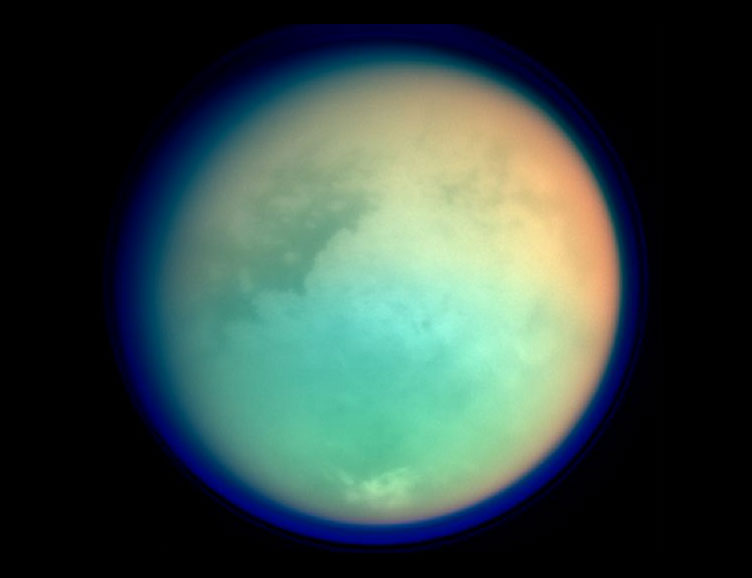
In week263 of This Week’s Finds, see the deep atmosphere of Titan:
Then read about the work of John Thompson and Jacques Tits, who won the 2008 Abel Prize. Learn how to build a group as a layer cake with simple groups as layers. And see an example of a Bruhat-Tits building!
April 2, 2008
2-Structure Types
Posted by David Corfield
Structure types (aka species) are functors where is the groupoid of finite sets and isomorphisms. For example, we could look at the which sends the -element set to the set of its orderings, which has cardinality .
We talked before about the forgetful functor from PointedSet to Set, and how this is used to pullback functors to construct things like the action groupoid. We can, of course, also do the same thing in the case of structure types. Pulling back our above, we see sitting above the element set, the set of orderings of that set with morphisms between them corresponding to permutations down below.
Might we expect there to be a similar story one level up? Here we would be interested in 2-functors where is the 2-groupoid of finite groupoids, equivalences, and natural isomorphisms. Examples include the identity 2-functor and the terminal 2-functor.
April 1, 2008
A Puzzle About Blueshifts
Posted by John Baez
Greg Egan posed the following problem about rotating black holes, saying “I thought I’d send you this question on the chance that you might have an instant, effortless answer to it. If not, please feel free to ignore it!”
I didn’t know the answer, but it seemed too interesting to just ignore. So, I asked if I could post it here, and he said yes. Maybe someone out there can help?