 Posts with this logo use


October 31, 2006
Bakovic on 2-Groupoid 2-Torsors
Posted by Urs Schreiber

Today Igor Bakovic gave a talk on his work on the categorification of the notion of principal groupoid fiber bundles.
Igor has a couple of nice results, of which his talk mentioned only few aspects and of which my report here will mention even fewer. When his thesis is finished there should be more to say.
In his talk Igor sketched the definition of torsors for bigroupoids . He indicated how a nonabelian cocycle with values in is obtained from any such torsor and how he hopes that these cocycles are in fact equivalent to -torsors.
Notice that reconstructing a 2-bundle from its local data is usually more subtle than going the other way around. Compare for instance Wirth’s work recently recalled by Stasheff.
Markl on Natural Differential Operators
Posted by Urs Schreiber
Just heard a talk by Martin Markl on
Natural Differential Operators and Graph Complexes.
He explained
- a way to make precise the idea that certain differential operators (like the Lie derivative, or the covariant derivative) are more natural than others,
- that all natural differential operators of a certain “type” arise as the 0th cohomology of a complex of graphs,
- where the graphs appearing here are like string diagrams representing the action of linear operators on tensor powers of vector spaces.
October 30, 2006
Foundations
Posted by David Corfield
Something that has long troubled me is the question of why philosophers have shown what to my mind is an unwarranted interest in ‘foundational’ mathematical theories which make little or no contact with mainstream mathematics. Two posts have made me reconsider the problem. Alexandre Borovik discusses Zilber’s work on the Schanuel conjecture, while Kenny Easwaran wonders whether string theorists may use mathematics which depends on conjectured axioms of set theory.
In comments to both I mention the model theorist Angus MacIntyre’s interest in foundational theories which do make contact with the mainstream. He personally wants to relate some of Gropthendieck’s ideas to model theory. To return to the philosophers, is their interest in disconnected theories just a vestige of earlier failed foundationalist projects, or is there a continuing rationale?
Puzzle #4
Posted by John Baez
This is the 100th blog entry at the n-Category Café! David, Urs and I thank all the people who have come together to make this a fascinating place to talk about philosophy, physics and math.
So, let’s celebrate with a puzzle.
What is the following sentence about?
“Such a brivla, built from the rafsi for the component gismu and cmavo, is called a lujvo.”
October 29, 2006
WZW as Transition 1-Gerbe of Chern-Simons 2-Gerbe
Posted by Urs Schreiber
As a kind of comment to M. Hopkins’ lecture on Chern-Simons theory (I, II, III) I want to describe how the Wess-Zumino-Witten 1-gerbe arises as the transition 1-gerbe of the Chern-Simons 2-gerbe (analogous to how a 1-gerbe itself has transition 0-gerbes, i.e. transition bundles).
I’ll advertise a point of view # where we consider the Chern-Simons 2-gerbe as a 3-bundle with structure 3-group
and use the fact that the 2-group
is #, as a groupoid with monoidal structure, nothing but the tautological bundle gerbe representation of the canonical “WZW” gerbe at level on .
October 27, 2006
Hopkins Lecture on TFT: Chern-Simons
Posted by Urs Schreiber
In the third part (following part I and part II) of his 2006 lecture series in Göttingen on topological field theory, Michael Hopkins considered the special case of 3-dimensional topological field theories characterized by classes
These are known as Chern-Simons field theories at level .
The first part of the talk reviewed some basic concepts in suitable language.
Then the seminal theorem in
D. Freed, M. Hopkins, C. Teleman
Twisted K-theory and loop group representations
math.AT/0312155,
which relates the modular tensor category encoding -Chern-Simons theory with the twisted -equivariant K-theory on - is used as a key for extracting topological information from Chern-Simons TFT 3-functors and reformulating everything in terms of K-theory.
October 26, 2006
Classical vs Quantum Computation (Week 4)
Posted by John Baez
Here are the notes for the latest installment of my course on Classical versus Quantum Computation:
- Week 4 (Oct. 26) - Currying and uncurrying, evaluation and coevaluation. Basic aspects of the "quantum lambda calculus": so far, the fragment of the lambda calculus that works in any monoidal closed category. The "name" of a morphism. Compact categories.
Last week’s notes are here; next week’s notes are here.
October 25, 2006
Lauda on Topological Field Theory and Tangle Homology
Posted by John Baez
Aaron Lauda an undergrad here at U.C. Riverside, but now he’s finished his Ph.D at Cambridge and is a postdoc at Columbia. I just got a copy of his thesis:
- Aaron Lauda, Open-closed topological quantum field theory and tangle homology, PhD thesis, Cambridge University, 2006.
It’s a great tour of these subjects!
Hopkins Lecture on TFT: Infinity-Category Definition
Posted by Urs Schreiber
In the second part of his lecture on topological field theory (notes on the first part were reproduced here) Michael Hopkins sketched what he currently sees as the emerging picture for the -tiered (aka “extended”) formulation of the definition of topological (quantum) field theory.
As I mentioned last time, in this picture one wants to refine the standard formulation in terms of 1-functors
by passing to -functors into something like -vector spaces.
In order to do so, M. Hopkins reviewed rudiments of the definition of weak -categories in terms of complicial sets, due to Street and Verity.
Ross Street
Weak omega-categories
(pdf).
He then sketched how he imagines forming an -category of -manifolds, , such that together with a suitable -category with an ring structure, one would say that
An -tiered -dimensional topological field theory is a morphism of -categories
(2)
Hopkins Lecture on TFT: Introduction and Outlook
Posted by Urs Schreiber
I am currently in Göttingen, attending the lecture series by M. Hopkins that I mentioned recently #, called
Topological Aspects of Topological Field Theory.
Yesterday we heard the first of three parts, titled Introduction to topological field theories. Michael Hopkins mentioned a couple of basic notions and concepts of topological field theories and, in closing, briefly indicated some of the more profound issues concerning the relation between Chern-Simons theory, categorification, K-theory # and elliptic cohomology #.
Here is a transcript of notes I have taken during this first lecture.
Puzzle #3
Posted by John Baez
For which 1998 referendum in Washington D.C. did the United States Congress pass a special bill to prevent the votes from even being counted?
Extra credit: do you know other cases where special laws were enacted to prevent votes from being counted?
October 23, 2006
Knowledge of the Reasoned Fact
Posted by David Corfield
In a comment I raised the question of what to make of our expectation that behind different manifestations of an entity there is one base account, of which these manifestations are consequences.
If I point out to you three manifestations of the normal distribution - central limit theorem; maximum entropy distribution with fixed first two moments; approached by distribution which is the projection onto 1 dimension of a uniform distribution over the -sphere of radius as increases - it’s hard not to imagine that there’s a unified story behind the scenes.
Perhaps it would encourage a discussion if I put things in a contextual setting.
This Week’s Finds in Mathematical Physics (Week 240)
Posted by John Baez
October 20, 2006
Classical vs Quantum Computation (Week 3)
Posted by John Baez
This week we had a guest lecture in our course on Classical versus Quantum Computation:
-
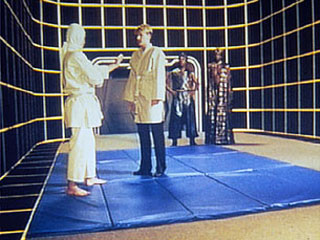
Week 3 (Oct. 19) - Guest lecture by James Dolan: Holodeck strategies and cartesian closed categories.
- James Dolan, Holodeck strategies and the lambda-calculus (a continuation of the above lecture).
- Todd Trimble, Holodeck games and CCCs (rigorous definitions and proofs).
If you read this stuff you’ll learn what Star Trek has to do with categories - and you’ll learn how to play
Last week’s notes are here; next week’s notes are here.
October 19, 2006
Algebras as 2-Categories and its Effect on Algebraic Geometry
Posted by Urs Schreiber
Here is another question from Bruce Bartlett which really deserves to be a post of its own (see also his last question of this type)… it’s about categories of algebras, algebras as categories and the possible implications for non-commutative algebraic geometry.
A Course on Classical Mechanics
Posted by John Baez
Here’s a course on classical mechanics for people who can handle some differential geometry:
- John Baez and Derek Wise, Classical Mechanics, Spring 2005.
This may come in handy if you’re following this Fall’s course on quantization and cohomology - so far we’re mostly covering the same ground at high speed, but soon we’ll shoot ahead.
October 18, 2006
Australian Category Theory
Posted by John Baez
The prowess of Australians in higher category theory is renowned worldwide. They’re way ahead of us. If you don’t know what I’m talking about, read this:
- Ross Street, An Australian conspectus of higher category theory, to appear in the proceedings of n-Categories: Foundations and Applications, eds. J. Baez and P. May.
For example, check out the fun story on page 4 where an Australian student, asked if he knew the definition of a topological space, correctly but incomprehensibly replied:
Yes, it is a relational β-module!

So, it behooves the rest of us to watch what they’re up to down under. For this reason, I plan to occasionally post comments to this article, announcing talks at the Australian Category Seminar. I won’t be obsessively systematic, so I apologize in advance for everyone’s talks that I forget to announce.
You can easily spot new comments by looking under “Recent Comments” on the right side of this blog. We engage in a lot of protracted discussions, so that’s a handy feature.
Topology in Trondheim and Kro, Baas & Bökstedt on 2-Vector Bundles
Posted by Urs Schreiber
The Nordic Conference in Topology takes place in Trondheim, 24-25 November 2006.
A few 2-categorical talks are announced, in particular concerning 2-bundles.
B. Dundas gives a talk titled 2-vector bundles and -theory of -theory, which, I am being told, is concerned with new progress on the old approach by Baas, Dundas & Rognes to conceive “forms of elliptic cohomology” in terms of 2-vector bundles.
In the same vein, Tore A. Kro talks about 2-categorical -theories, which is apparently based on
N. Baas, M. Bökstedt & T. A. Kro
2-categorical K-theories
Royal Swedish Academy of Sciences, Institut Mittag-Leffler
preprint, spring 2006, nr. 43
D-Branes from Tin Cans: Arrow Theory of Disks
Posted by Urs Schreiber
Participants of the seminar Quantization and Cohomology are being asked to think about categorification of quantum mechanics. Being the remote participant that I am, I follow the seminar by gnawing on
Exercise C: Categorify the quantum theory of the charged particle.
Hints:
-
Find the right arrow theory.
You know that it is right when
- it categorifies smoothly;
-
the result reproduces existing theory, where available
(many people have thought about the categorified point before in different language - you should reproduce whatever is good about their results).
-
It is not a coincidence that parallel transport in a bundle as well as propagation in QFT both are functors taking values in vector spaces. Use the former as a guide to the latter and explain the relation.
October 17, 2006
Classical vs Quantum Computation (Week 2)
Posted by John Baez
Here are the notes for the latest installment of my course on classical versus quantum computation:
- Week 2 (Oct. 12) - Monoidal categories versus cartesian categories. Closed monoidal categories.
Last week’s notes are here; next week’s notes are here.
October 16, 2006
Crossed Products and Not All That
Posted by Guest
[The following entry is by A. Rivero. He volunteered # to report from a lecture series currently given by Alain Connes, concerned with the application of spectral geometry to the physics of the standard model #. This entry here is a warmup. - urs]
Hi, this is A. Rivero speaking. I am invited to the guest account mainly to follow the topic of Connes’s spectral action in a couple of postings, but while we wait for the Connes-Marcolli-Chamseddine paper, I am doing a bit of effort to train myself on crossed products and Morita equivalence.
Adjunctions and String Composition
Posted by Urs Schreiber
At one of our Café tables # Jim Stasheff listed a couple of different notions of paths with composition. In particular, motivated by string field theory, people have considered categories whose
- morphisms are parameterized paths
- composition of which is defined whenever a portion of the end of is the reverse of a portion of the beginning of in which case the composition is the result of cancelling both copies of this portion, like this:
If we agree that the cancelled portion is always exactly one half of the string, we are left with the associative composition going back to
Edward Witten
Noncommutative Geometry And String Field Theory.
Nucl.Phys.B268:253,1986 .
If, however, we allow arbitrary portions to be cancelled we get a nontrivial associator.
Here I just want to notice that all these compositions can be nicely understood as coming from special ambidextrous adjunctions in the 2-category whose objects are points of , whose morphisms are parameterized paths in and whose 2-morphisms are, for instance, thin homotopy classes of 2-paths.
October 15, 2006
The Encyclopaedists’ Dream
Posted by David Corfield
I’m just finishing off a talk I was asked to give to my Machine Learning group at a retreat tomorrow. They want me to give them an ‘Epistomology for Dummies’. As I’m more at home with Anglophone philosophy of science approaches, I thought I’d better take a look at other approaches, both Anglo-American and Continental. As a first step I tried out the English, French and German Wikipedia articles. What a wonderfully varied range of accounts, from the Anglo-American Epistemology, which gives pride of place to Gettier’s demolition of the justified true belief account of knowledge, to the French Épistémologie, which dwells largely on philosophy of science, to the German Erkenntnistheorie, which finds space to talk about theology and politics, Hegel and Schopenhauer. Even when the French Théorie de la connaissance starts off with Gettier, it rapidly drifts into a ragbag of non-Anglophone topics.
October 13, 2006
Bundle Gerbes: Connections and Surface Transport
Posted by Urs Schreiber
A continuation of my proposed addition # to the Wikipedia entry on bundle gerbes.
By the way, if anyone reading this is versed in Wikipedia editing and feels like inserting these -Café entries nicely formatted into Wikipedia, I’d very much appreciate it. I can offer the source code on request, if that helps.
Bundle Gerbes: General Idea and Definition
Posted by Urs Schreiber
I was asked to edit the Wikipedia entry on bundle gerbes.
For one, it does not actually say what a bundle gerbe is. Another thing is that it falsely attributes the insight that the Wess-Zumino term in the WZW-model arises as a special case of parallel 2-transport to us. That should be corrected.
I’ll develop my contribution here, before copying it to Wikipedia.
October 11, 2006
What is the Categorified Gelfand-Naimark Theorem?
Posted by Urs Schreiber
Bruce Bartlett has made a very fruitful observation, dealing with which requires a good understanding of a couple of details of
John Baez
Higher-Dimensional Algebra II: 2-Hilbert Spaces
q-alg/9609018.
Since we seem to need those details - and since I keep forgetting them - I’ll give a very condensed review of the main points.
Wittgenstein and Thurston on Understanding
Posted by David Corfield
Two contributions to the Berlin Workshop I didn’t mention addressed the Jaffe-Quinn debate (original article, 15 mathematicians reply, Thurston replies, Jaffe and Quinn reply to the replies). Michael Stoeltzner spoke on The Ontology of Mathematics, while Oliver Petersen argued that Wittgenstein could offer us a way out of the bind at stake in the debate between Jaffe and Quinn, on the one hand, and Thurston on the other, by radicalising the former’s contentions about the importance to the health of mathematics of providing rigorous proofs for conjectures.
Euler Characteristic of a Category
Posted by David Corfield
After Baez and Dolan taught us about groupoid cardinality (p. 15), now Tom Leinster teaches us about the Euler characteristic of a category.
I wonder if anything further has been done about the former’s wonderfully wild idea that the Euler characteristic of the sphere, i.e., 2, should be the same as what they call its homotopy cardinality on the page mentioned above, defined as an alternating product of the orders of the homotopy groups of the sphere.
Categorified Gelfand-Naimark Theorem and Vector Bundles with Connection
Posted by John Baez
Here’s a question from Bruce Bartlett which really deserves to be a post of its own… it’s about path groupoids, the categorified Gelfand-Naimark theorem, and vector bundles!
Quantization and Cohomology (Week 2)
Posted by John Baez
Here are the notes for this week’s class on Quantization and Cohomology:
-
Week 2 (Oct. 10) - The Lagrangian approach to classical mechanics. Action as the integral of a 1-form (prelude).
- Homework: A spring in imaginary time.
Last week’s notes are here; next week’s notes are here.
A spring in imaginary time, you ask? Read on…
October 10, 2006
Talks by Hopkins and Willerton
Posted by Urs Schreiber
Since I already announced our next colloquium talk # I might just as well mention a few other interesting upcoming events - at least for those who spend the next month or so in central Europe.
-
In the context of the Andrejewski lecture series, Michael Hopkins gives a series of lectures on Topological aspects of topological field theory at the math institute of Universität Göttingen, consisting of three talks
- Tuesday 24. October, Introduction to topological field theories
- Wednesday 25. October, Topological methods in topological field theories
- Thursday 26. October, The Wess-Zumino-Witten conformal blocks
-
In the first of next semester’s colloquium of our Center for Mathematical Physics, Simon Willerton will talk about Gerbes, groupoids and Dijkgraaf-Witten theory, from the point of view of higher categories along the lines of Freed’s approach; November 9, here in Hamburg.
See for instance
S. Willerton
The twisted Drinfeld double of a finite group via gerbes and finite groupoids
math.QA/0503266
Kosmann-Schwarzbach & Weinstein on Lie Algebroid Classes
Posted by Urs Schreiber
On October 24 Yvette Kosmann-Schwarzbach will give a talk in the Hamburg math colloquium on
Modular classes and relative modular classes in Lie algebroid theory
based on work with Alan Weinstein
Y. Kosmann-Schwarzbach & A. Weinstein
Relative modular classes of Lie algebroids
math.DG/0508515
and Camille Laurent-Gengoux
Y. Kosmann-Schwarzbach & C. Laurent-Gengoux
The modular class of a twisted Poisson structure
math.SG/0505663 .
October 9, 2006
On n-Transport: Descent of the Universal Transition
Posted by Urs Schreiber
Last time # I talked about how the category of -paths (I consider and only) in a space and that of -paths in a regular surjection
give rise to the universal local transition of -transport # on ; and that this is nothing but the category of -paths in which may “jump” between different lifts along .
Moreover, from any -local transition data of -transport (trivial transport on single patches, transitions of that on double intersections, transitions of these on triple intersections, and so on) one obtains a 2-transport
Clearly, this wants to descend to . The descent is manifest if
For general the constructions of this equivalence that I have managed to come up with (e.g. section 3. here) are a little unwieldy. But with a certain assumption on (which in common applications is always possible) it looks much better:
descent of the universal transition.
Philosophy of Physics
Posted by David Corfield
Next month sees the publication of The North Holland Handbook of Philosophy of Physics. Interaction between philosophers and practitioners is very good in this field. For one, as I pointed out in another post, philosophers of physics tend to know a lot more about physics than philosophers of mathematics do about mathematics. Second, as the blurb says,
Some of the best work in the philosophy of physics is being done by physicists, as witnessed by the fact that several of the contributors to the volume are theoretical physicists: viz., Ellis, Emch, Harvey, Landsman, Rovelli, t Hooft, the last of whom is a Nobel laureate.
One of the chapters of the Handbook would provide some further background to classical mechanics for John’s course. It’s Jeremy Butterfield’s On Symplectic Reduction in Classical Mechanics. (John once gave some lectures the Hamiltonian way, but only has notes for his Lagrangian course.) Jeremy is one of the editors of the Handbook and is a philosopher of physics based in Oxford.
In the aforementioned post, I also suggest there that philosophers of physics could be doing much more to influence the direction of mainstream analytic philosophy, such as disrupting received ideas of metaphysics. Jeremy is someone who has attempted to do precisely this.
October 8, 2006
Zooming Out in Time
Posted by John Baez
How can we detect and understand oncoming crises in time to avert them? Sometimes we must “zoom out”: expand our perspective and find similar situations in the distant past. A good example is climate change. What can a few degrees of warming do? To answer this, we need to know some history: how the Earth’s climate has changed over the last 65 million years.
- John Baez, Zooming Out in Time, one of the Seminars About Long-Term Thinking at the Long Now Foundation. Doors open at 7 pm at The Cowell Theater, San Francisco, Friday October 13, 02006.
October 6, 2006
Classical vs Quantum Computation (Week 1)
Posted by John Baez
Here are yesterday’s notes on classical versus quantum computation:
-
Week 1 (Oct. 5) -
Types and operations. Categories as theories. Monoidal categories versus categories with finite products - also known as “cartesian categories”.
- Homework: show that every category with finite products can be made into a monoidal category - see above notes for details.
Last week’s notes are here; next week’s notes are here.
On n-Transport: Universal Transition
Posted by Urs Schreiber
Further chasing the -transport # Illuminati:
Abstract:
To any morphism of domains of 2-transport, we may associate a universal -local transition. The associated object turns out to be the category of 2-paths in the 2-groupoid . The associated factorization morphism turns out to be the descending trivialized transport.
A remark related to our discussion # of reconstructing # 2-transport from local data.
So Irigaray was Right?
Posted by David Corfield
A very long time ago, while teaching in a Cultural Studies department, I taught on an introductory course on postmodernism. One of the thinkers we treated was Luce Irigaray:
Irigaray examines the systematic suppression of feminine and maternal concerns from the history of Western philosophy in Ce sexe qui n’en est pas un (This sex which is not one) (1977), arguing that valorization of the masculine is destructive to the fluid multiplicity of feminine sexuality.
Now, Irigaray was one of the targets of Sokal and Bricmont:
Alan Sokal and Jean Bricmont’s Fashionable Nonsense criticizes Irigaray, as a general example of what they believe is the anti-scientific tendency of “postmodernism”. They cite her analyses of as a “sexed equation” (because it privileges the speed of light) and her argument that fluid mechanics has been neglected by “masculine” science that prefers to deal with “masculine” rigid objects rather than “feminine” fluids. (Wikipedia)
No surprise for Irigarayans then but that a woman, Penny Smith, should sort out the Navier-Stokes equations. All they need show now is the irrelevance of the fact that, as with any mathematician, Smith’s work emerges from a vast communal effort. E.g., according to Christina Sormani, Smith told her:
It was Marsden’s book [Applications of Global Analysis in Mathematical Physics] which talked about the geometric theory of both Einstein Cauchy and NS Cauchy that got me into both problems.
And then there’s the small worry that relativity and hydrodynamics may be quite closely related.
Without wishing to suppress the fluidity, what opportunities are there for categorified Navier-Stokes?
October 5, 2006
Quantization and Cohomology (Week 1)
Posted by John Baez
This fall I’m also teaching a seminar on quantization and cohomology. Derek Wise is taking notes, which you can get as PDF files here:
- John Baez and Derek Wise, Quantization and Cohomology.
I’ll create a blog entry for each week’s lecture, and anyone with something to say or ask can post comments. So, it’s a bit like an online course. Here are this Tuesday’s notes:
- Week 1 (Oct. 3) - How the dynamics of p-branes resembles the statics of (p+1)-branes.
Next week’s notes are here. For a syllabus, read on…
New Scientist Reacts!
Posted by John Baez
You may recall Greg Egan’s plea to save the magazine New Scientist from a rising tide of crackpottery after it published a glowing article about a propulsion system called the EmDrive. According to its inventor, Roger Shawyer, this drive can push a rocket forwards by bouncing microwaves back and forth in a box. The article didn’t mention that this violates conservation of momentum.
A bunch of us wrote emails to the magazine, with no apparent reaction.
Now they’ve reacted! New Scientist now has a blog thread on the Shawyer article. It starts with a statement by the editor defending the article - see below.
I urge folks who sent email to New Scientist or comments on this blog to post them on the New Scientist blog. That way, your opinions will be publicly visible. But please: be polite, rational, and crystal-clear. There’s nothing to be gained by rudeness.
Trimble’s Definition of Tetracategory
Posted by John Baez
Trimble’s legendary lost definition of “tetracategory”is now available here:
- Todd Trimble, Notes on tetracategories.
October 4, 2006
λ-Calculus in Paris
Posted by John Baez
Since I’m getting into the λ-calculus and I’ll be visiting Paul-André Melliès of the Proofs, Programs and Systems group at CNRS next July, I’m tempted to go a bit early and attend this:
- Typed Lambda Calculi and Applications ‘07, Paris, June 26-28, 2007. Part of Rewriting, Deduction and Programming ‘07.
At least I hope someone reading this attends and reports back to us!
More information follows…
Emulating Aristotle
Posted by David Corfield
That’s step 2 of the attempted Renaissance man emulation over. On Monday night, Nick Read and I discussed our books, Sick and Tired and Why Do People Get Ill? at the Ilkley Literature Festival. It’s excellent that such a small town can attract high-selling writers (Jeremy Paxman, John Simpson, Andrew Motion,…).
Wang at AustMS 2006
Posted by Guest
The following “guest post” is by David Roberts:
At the Australian Mathematical Society’s annual meeting in Sydney, Brian Wang gave the talk Gerbes, D-branes and loop group representations. This is of particular interest to at least one blogger here, so I provide some details.
October 3, 2006
Classical vs Quantum Computation (Week 1)
Posted by John Baez
This fall I’m teaching a seminar on classical versus quantum computation, with an emphasis on cartesian closed categories and their quantum generalizations. Derek Wise is taking notes, which you can get as PDF files here:
- John Baez and Derek Wise, Classical versus quantum computation.
I’ll create a blog entry for each week’s lecture, and anyone with something to say or ask can post comments. So, it’s a bit like an online course! Here are last Thursday’s notes:
-
Week 1 (Sept. 28) - Computation, the lambda calculus and cartesian closed categories: an overview.
- Homework: exercises 1.1 and 1.2 in Selinger’s Lecture notes on the lambda calculus.
Next week’s notes are here. For a syllabus, read on…
October 2, 2006
Voevodsky on the Homotopy λ-Calculus
Posted by John Baez
After Vladimir Voevodsky won the Fields medal, his research took a surprising turn. Instead of applying homotopy theory to algebraic geometry, he began applying it to computer science. Now he has made this available:
- Vladimir Voevodsky, A very short note on homotopy -calculus, Sept. 27, 2006.
This appeared on a mailing list for announcements on type theory in computer science. I thank Benoit Valiron for bringing this to my attention and preparing the above Postscript version - I couldn’t read Voevodsky’s original PDF file.
Topos Theory at Chicago
Posted by John Baez
Tom Fiore of the University of Chicago writes:
The Category Theory Seminar will meet Thursdays 3-4 in Eckhart 203. This quarter we will have a series of talks on topos theory, model categories, and quasicategories. These current topics lie at the intersection of algebraic geometry, topology, logic, and higher category theory, and may be of interest to a wider audience. We will begin with an introduction to topos theory this Thursday, October 5th with a talk by Mike Shulman. Our website is below:
- University of Chicago, Category Theory Seminar.
Here’s the abstract for Shulman’s talks…
October 1, 2006
The Consolation of n-Categories
Posted by David Corfield
As mentioned here, Good Life in the Scientific Revolution: Descartes, Pascal, Leibniz, and the Cultivation of Virtue by Matthew L. Jones should be well worth reading. Here’s the publisher’s blurb:
Amid the unrest, dislocation, and uncertainty of seventeenth-century Europe, readers seeking consolation and assurance turned to philosophical and scientific books that offered ways of conquering fears and training the mind - guidance for living a good life.
Klein 2-Geometry VI
Posted by David Corfield
It’s time to convene the sixth monthly session of the longest running Pro-Am math event in the blogosphere. The September session won’t go down in history as one of the most productive of the series. The Professional was justifiably distracted. To recap on the last steps taken. John asked us to
guess the precise description of the projective space associated to .
The answer to this was: worth of objects each with worth of automorphisms.
John then asked for a description of all categorified Grassmanians. I attempted an answer, raised a concern, and posed a question.
Puzzle #2
Posted by John Baez
The names of which pair of Shakespearean characters appear on the astronomer Tycho Brahe’s coat of arms - in the list of his ancestors?
For extra credit: why? (Nobody seems to know.)