 Posts with this logo use


April 26, 2007
This Week’s Finds in Mathematical Physics (Week 250)
Posted by John Baez

In week250 of This Week’s Finds, start with a little puzzle about a game of flipping coins. Then learn about Popescu-Rohrlich game, which involves flipping coins and quantum entanglement!
Then, continue reading the Tale of Groupoidification — in which we start by recalling the history of special relativity, and use an example from relativity to ponder "atomic invariant relations". We’ll see these are just what mathematicians normally call "double cosets" — but we’ll see they’re also spans of groupoids equipped with extra stuff.
April 25, 2007
n-Curvature
Posted by Urs Schreiber
We have learned that parallel -transport in an -bundle with connection over a base space is an -functor from the -path -groupoid of to some -category of fibers.
With every notion of connection we expect to obtain notions of
1) curvature;
2) Bianchi identity;
3) parallel sections;
4) covariant derivative.
Here we describe the functorial incarnation of these concepts. We find
1) To every transport -functor is canonically associated a curvature -functor The functor is flat precisely if is trivial on all -morphisms.
2)
The curvature -functor, regarded as an -transport itself,
is always flat.
3) Parallel sections of the -bundle with connection associated with are equivalent to morphisms from the trivial -transport into :
4) General sections together with their covariant derivative are equivalent to morphisms from the trivial curvature -transport into the curvature -transport
Learning from Our Ancestors
Posted by David Corfield
Back in this post I argued against Bernard Williams’ view of science:
The pursuit of science does not give any great part to its own history, and that it is a significant feature of its practice… Of course, scientific concepts have a history: but on the standard view, though the history of physics may be interesting, it has no effect on the understanding of physics itself. It is merely part of the history of discovery.
Taking mathematics as a science, I took Robert Langlands to be on my side against Williams:
Despite strictures about the flaws of Whig history, the principal purpose for which a mathematician pursues the history of his subject is inevitably to acquire a fresh perception of the basic themes, as direct and immediate as possible, freed of the overlay of succeeding elaborations, of the original insights as well as an understanding of the source of the original difficulties. His notion of basic will certainly reflect his own, and therefore contemporary, concerns.
Now, from the interview I mentioned in the last post it appears that Connes has read Galois’ papers with profit. Meanwhile, John has been encouraging us to better ourselves by reading Felix Klein’s Erlanger program. Something I’d like to hear about are instances where people feel they have gained something by reading works from the nineteenth century or earlier, or histories on those works, especially instances where there has been some element of surprise at how not all that was good about a certain way of thinking has survived to the present day.
April 23, 2007
Who’s on the Right Track?
Posted by David Corfield
Our post at the Café.
In this interview, Alain Connes mentions work he has carried out with Matilde Marcolli on a book which treats physics for three hundred pages, and number theory for the second three hundred. Regarding an analogy they have pursued, concerning spontaneous symmetry breaking in the two fields, he writes
We know that the universe has cooled down, well, it suggests that when the universe was hotter than, say, at the Planck’s temperature, there was no geometry at all, and that only after the phase transition was there a spontaneous symmetry breaking which selected a particular geometry and therefore the particular universe in which we are. (p. 8)
This also suggests that
…the people who are trying to develop quantum gravity in a fixed space are on the wrong track.
If this latter claim were true, which quantum gravity theorists would not be ruled out?
April 22, 2007
Report-Back on BMC
Posted by Urs Schreiber
– guest post by Bruce Bartlett –
I was born in a large Welsh industrial town at the beginning of the Great War: an ugly, lovely town (or so it was, and is, to me), crawling, sprawling, slummed,unplanned, jerry-villa’d, and smug-suburbed by the side of a long and splendid-curving shore…
Thus described Dylan Thomas his childhood home of Swansea, Wales - the venue of the British Mathematics Colloquium this year :
Inspired by John’s blurb about the higher categories workshop at Fields earlier this year, I thought I’d send Urs a report-back of the (admittedly less glamorous) “BMC” , and mention a few things possibly of interest to -café patrons.
April 20, 2007
Cohomology and Computation (Week 21)
Posted by John Baez
This time in our course on Cohomology and Quantization we explained why mathematicians like to turn algebraic gadgets and topological spaces into simplicial sets — and how this actually works, in the case of topological spaces:
- Week 21 (Apr. 19) - Simplicial sets and cohomology. Two sources of simplicial sets: topology and algebra. The topologist’s category of simplices, . How a topological space gives a simplicial set called its ‘singular simplicial set’ . How this gives a functor .
Last week’s notes are here; next week’s notes are here.
Quantization and Cohomology (Week 21)
Posted by John Baez
This week in our course on Quantization and Cohomology we used Chen’s ‘smooth space’ technology to implement a new approach to Lagrangian mechanics, based on a smooth category equipped with an ‘action’ functor:
-
Week 21 (Apr. 17) - Any quotient of a smooth space becomes a
smooth space. The category of smooth spaces has pushouts.
The category of smooth spaces is cartesian closed. The path groupoid of a smooth space . The path groupoid is a smooth category. Smooth functors.
Theorem: a smooth functor is the same as a 1-form
on X.
Supplementary reading:
-
John Baez and Urs Schreiber,
Higher gauge theory II: 2-connections, draft version.
Section 6.1: proof that for any Lie group , smooth functors are the same as -valued 1-forms on
-
John Baez and Urs Schreiber,
Higher gauge theory II: 2-connections, draft version.
Last week’s notes are here; next week’s notes are here.
Cohomology and Computation (Week 20)
Posted by John Baez
This week in our seminar on Cohomology and Computation, we began to see what’s so great about simplices:
- Week 20 (Apr. 12) - Cohomology and the category of simplices. Simplices as special categories: finite totally ordered sets, which are isomorphic to "ordinals". The algebraist’s category of simplices, . Face and degeneracy maps. The functor from to Top sending the ordinal to the standard -simplex. Simplicial sets. Preview of the cohomology of spaces.
Last week’s notes are here; next week’s notes are here.
April 19, 2007
Some Conferences
Posted by Urs Schreiber
Busy with reducing the write-up lag. No time to blog.
I am trying not to try to go to too many events, but here are two more I might not be able to resist trying to attend (which may still fail even if I try).
This beautiful one
Principal Bundles, Gerbes and Stacks
17-23 June, 2007 - Bad Honnef, Germany
is right around the corner for me. At least Konrad Waldorf will go and talk about our stuff.
Not sure if John has mentioned this one anywhere yet except on his lectures site, but even if so it’s well worth mentioning it twice:
August 5 - 10 2007, Oslo, Norway
April 17, 2007
The Field With One Element
Posted by David Corfield
For some grand theory building and an answer to the question ‘What is the field with one element?’, see Nikolai Durov’s New Approach to Arakelov Geometry.
There’s something extremely intriguing about a mathematical entity which has known effects, but which has not been defined. It generates a sense of independent reality. As I mentioned in the Tuesday 8 November entry on my old blog, a vector space over the ‘field with one element’ is a pointed set. Thinking in such terms makes sense of many combinatorial facts, see TWF 187.
Here’s Durov’s answer:
The ‘field with one element’ is the free algebraic monad generated by one constant (p. 26) or the universal generalized ring with zero (p. 33).
This will need some unpacking.
The Two Cultures of Mathematics
Posted by David Corfield
Part of what intrigues me about reading Terence Tao’s blog is that he displays there a different aesthetic to the one largely admired here. The best effort to capture this difference is, I believe, Timothy Gowers’ essay The Two Cultures of Mathematics, in which the distinction is made between ‘theory-builders’ and ‘problem-solvers’. I think we have to be very careful with these labels, as Gowers himself is.
…when I say that mathematicians can be classified into theory-builders and problem-solvers, I am talking about their priorities, rather than making the ridiculous claim that they are exclusively devoted to only one sort of mathematical activity. (p. 2)
To avoid misunderstanding, then, perhaps it is best to give straight away paradigmatic examples of work from each culture.
Theory-builders: Grothendieck’s algebraic geometry, Langlands Program, mirror symmetry, elliptic cohomology.
Problem-solvers: Combinatorial graph theory, e.g, Ramsey’s theorem, Szemerédi’s theorem, arithmetic progressions among the primes.
Gowers mentions Sir Michael Atiyah as a prime example of a theory builder, and recommends his informal essays, the ‘General papers’ of Volume 1 of his Collected Works. Indeed, they convey an aesthetic which I came to admire enormously as a PhD student in philosophy. On the other hand, Paul Erdös was a consummate problem-solver. What then of the corresponding aesthetic?
One of the attractions of problem-solving subjects, which Gowers collects under the loose mantle ‘combinatorics’, is the easy accessibility of the problems.
One of the great satisfactions of mathematics is that, by standing on giants’ shoulders, as the saying goes, we can reach heights undreamt of by earlier generations. However, most papers in combinatorics are self-contained, or demand at most a small amount of background knowledge on the part of the reader. Contrast that with a theorem in algebraic number theory, which might take years to understand if one begins with the knowledge of a typical undergraduate syllabus. (p. 12)
For someone who had recently won a Fields’ Medal, it would seem strange to feel the need to defend one’s interests, but after describing a problem involving the Ramsey numbers, Gowers writes:
I consider this to be one of the major problems in combinatorics and have devoted many months of my life unsuccessfully trying to solve it. And yet I feel almost embarrassed to write this, conscious as I am that many mathematicians would regard the question as more of a puzzle than a serious mathematical problem. (p. 11)
April 14, 2007
Incandescence
Posted by John Baez
My favorite science fiction writer is coming out with a new novel!
- Greg Egan, Incandescence, Orion/Gollancz, United Kingdom, to be published May 1st, 2008.
That’s a long time to wait. Luckily, we can already read a story set in the same universe:
- Greg Egan, Riding the Crocodile.
Topos Theory in the New Scientist
Posted by John Baez
Our favorite science magazine has decided to take on Chris Isham and Andreas Döring’s work on topos theory and physics:
- Robert Matthews, Impossible things for breakfast, at the Logic Café, New Scientist, April 14, 2007.
At the n-Category Café we serve only possible things for breakfast. But, many things are possible…
April 12, 2007
Schur Functors
Posted by John Baez
As part of the Tale of Groupoidification, I’ll need to talk about Schur functors. As usually defined, these are simply functors
where is the category of finite-dimensional complex vector spaces.
An example of a Schur functor is ‘take the antisymmetrized 3rd tensor power’. In the category of Schur functors, , every object can be expressed as a direct sum of certain ‘irreducible’ objects, which correspond to Young diagrams. The example I just mentioned corresponds to this Young diagram:
Given any group representation
we can compose it with any Schur functor
and get a new representation
This is a great method of getting new reps from old.
There’s much more to say… but first, Allen Knutson has a question!
Structure and Pseudorandomness
Posted by David Corfield
Terence Tao has written three delightful posts, starting here, detailing his views delivered at the Simons’ lectures at MIT on the relationship between structure and pseudorandomness in mathematics. We read
Structured objects are best studied using the tools of algebra and geometry.
Pseudorandom objects are best studied using the tools of analysis and probability.
In order to study hybrid objects, one needs a large variety of tools: one needs tools such as algebra and geometry to understand the structured component, one needs tools such as analysis and probability to understand the pseudorandom component, and one needs tools such as decompositions, algorithms, and evolution equations to separate the structure from the pseudorandomness.
From this position, what do we make of (-)category theory? Is it merely an attempt to deepen our grasp on what is structural in mathematics, and as such it helps us with the whole to the extent that it throws into clearer relief what is pseudorandom?
Just as Tao illustrates hybridness by way of the prime numbers, would it be profitable to view examples of (-)categories as hybrid?
April 11, 2007
Category Theory as Esperanto
Posted by David Corfield
From Ross Street’s obituary of Max Kelly in The Sydney Morning Herald:
Professor Emeritus Max Kelly was solely responsible for introducing into Australia a branch of mathematics known as category theory, which pervades almost all research in the fundamental structures of mathematics, allowing people in one branch of maths to understand others in a common form, not unlike Esperanto in languages. It is used in theoretical physics, computer architecture, software design, and banking and finance to connect ideas and streamline the management of information.
The Wikipedia entry on Esperanto reckons it has “enjoyed continuous usage by a community estimated at between 100,000 and 2 million speakers”, and that there are about a thousand native speakers. It looks, then, that category theory is a more successful language, so long as we restrict ourselves to the mathematical community. Even at the upper limit, only 1 in 3000 of the world uses Esperanto, and only 1 in 6 million speaks it as ‘a native’.
How many mathematicians speak category theory as a native?
Quantization and Cohomology (Week 20)
Posted by John Baez
In this week’s class on Quantization and Cohomology, we introduce Chen’s "smooth spaces" which generalize smooth manifolds and provide a more convenient context for differential geometry. These will allow us to define "smooth categories" and study the principal of least action starting with any smooth category equipped with a smooth functor describing the ‘action’.
- Week 20 (Apr. 10) - Smooth spaces and smooth categories. The concept of a "category internal to " where is any category with pullbacks. The category of smooth manifolds does not have pullbacks. Grothendieck’s dictum. Chen’s category of smooth spaces. Examples: the discrete and indiscrete smooth structures on a set. Any convex set or smooth manifold is a smooth space. The product and coproduct of smooth spaces. Any subset of a smooth space becomes a smooth space. Homework: the category of smooth spaces has pullbacks.
Last week’s notes are here; next week’s notes are here.
April 9, 2007
This Week’s Finds in Mathematical Physics (Week 249)
Posted by John Baez
In week249 of This Week’s Finds you can finally see Felix Klein’s famous "Erlangen program" for reducing geometry to group theory - translated into English!
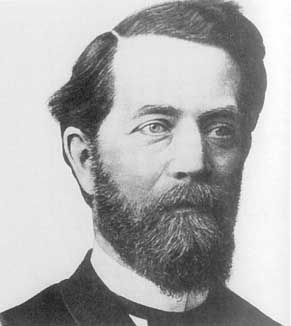
Then, continue reading the Tale of Groupoidification - in which we see how group actions are just groupoids equipped with extra stuff.
April 6, 2007
Why Mathematics Is Boring
Posted by John Baez
Apostolos Doxiadis is mainly known for his novel Uncle Petros and Goldbach’s Conjecture. A few years ago, he helped set up an organization called Thales and Friends, whose goal is to:
- Investigate the complex relationships between mathematics and human culture.
- Explore new ways of talking about mathematics inside the mathematical and scientific communities.
- Create new methods for communicating mathematics to the culture at large, including education.
We’re having a meeting this summer:
- Thales and Friends, Mathematics and Narrative, Delphi, July 20-23.
I’m going to speak on ‘Why mathematics is boring’. Take a look at my abstract! You may have ideas of your own on this subject. If so, I’d be glad to hear them, because it’s a big problem and too little has been written about it — much less done about it.
Whatever Happened to the Categories?
Posted by David Corfield
Are we doing our job as broadcasters well? Max Tegmark has a new paper out on the physical universe as an abstract mathematical structure. Not a whiff of categories, let alone -categories.
Tegmark has read some of philosophy of science’s ‘structural realism’ literature, but this wouldn’t have pointed him in our direction. Nor would it likely have helped had he looked at philosophy of mathematics’ ‘structuralism’ literature.
Perhaps we’ll have to wait until someone unites quantum field theory and general relativity using a tetracategory before we get noticed.
Cohomology and Computation (Week 19)
Posted by John Baez
We’re continuing our seminar on Classical vs Quantum Computation this spring, but the focus has changed enough that a new title is in order: Cohomology and Computation. I’ll keep up the same numbering system for lectures, though:
- Week 19 (Apr. 5) - The origin of cohomology in the study of ‘syzygies’, or ‘relations between relations’. Syzygies in the study of linear equations, and more generally in the study of any presentation of any algebraic gadget. Building a topological space from a presentation of an algebraic gadget. Euler characteristic.
Last week’s notes are here; next week’s notes are here.
April 5, 2007
Automated Theorem Proving
Posted by David Corfield
In Brussels, we heard from Koen Vervloesem about attempts towards better automated theorem provers. Readers of my book will know that I devoted its second chapter to automated theorem provers, to provide a relief against which to consider ‘real mathematics’. One proof I focused on was that discovered by the program EQP for the Robbins problem. Where many would see the proof as a meaningless manipulation of symbols, Louis Kauffman was sufficiently impressed to say:
I understood EQP’s proof with an enjoyment that was very much the same as the enjoyment that I get from a proof produced by a human being.
Having not looked at automated theorem proving for a number of years, it was interesting to hear from Koen what has been happening. One crucial realisation was that computers would have to be given the capability to combine logical reasoning with algebraic manipulation. Trying to expand takes an inordinate amount of logical shuffling.
We heard about Michael Beeson’s Automatic generation of a proof of the irrationality of , Journal of Symbolic Computation 32, No. 4 (2001), pp. 333-349, which does manage this combination. Beeson may be better known to readers as a constructivist mathematician, but then perhaps the jump to automated theorem proving is not so surprising.
Always in these cases one looks to see how firmly the computer’s hand has been held. Naturally, we’re not expecting the machine to know why it matters whether a number is algebraic or not. Nor do we just feed in a definition of an algebraic number and expect it to cope. The task it is set is to show that:
This is a condition which transcendental numbers satisfy. I’ll leave you to work out how impressed to be.
April 4, 2007
Quantization and Cohomology (Week 19)
Posted by John Baez
The spring quarter has begun here at U. C. Riverside! Our seminar on Quantization and Cohomology resumed today. This time we’ll try to bring cohomology more explicitly into the picture — and we’ll start by seeing how it arises in a modern approach to classical mechanics:
- Week 19 (Apr. 3) - Finding critical points of an action functor . For this, should be a ‘smooth category’ and should be something like a ‘smooth functor’. How can we make these concepts precise? The example where is the smooth path groupoid of a manifold equipped with a 1-form (for example, a cotangent bundle equipped with its canonical 1-form). The definition of ‘smooth category’ - that is, a category internal to some category of ‘smooth spaces’.
Last week’s notes are here; next week’s notes are here.
April 3, 2007
Oberwolfach CFT, Tuesday Morning
Posted by Urs Schreiber
Q-systems in -categories, the Drinfeld double and its modular tensor representation category and more on John Roberts’ ideas on higher nonabelian cohomology in quantum field theory, all on one Tuesday morning at this CFT workshop.
Oberwolfach CFT, Monday Evening
Posted by Urs Schreiber
End of first day at the CFT workshop. Before going to bed, some quick notes on some random things.
April 2, 2007
Rota on Combinatorics
Posted by David Corfield
From an interview with Gian-Carlo Rota and David Sharp:
Combinatorics is an honest subject. No adèles, no sigma-algebras. You count balls in a box, and you either have the right number or you haven’t. You get the feeling that the result you have discovered is forever, because it’s concrete. Other branches of mathematics are not so clear-cut. Functional analysis of infinite-dimensional spaces is never fully convincing; you don’t get a feeling of having done an honest day’s work. Don’t get the wrong idea - combinatorics is not just putting balls into boxes. Counting finite sets can be a highbrow undertaking, with sophisticated techniques.
I remember somewhere else he spoke of his mathematical ‘bottom line’ as concerned with putting balls in boxes.
Much combinatorics of our day came out of an extraordinary coincidence. Disparate problems in combinatorics, ranging from problems in statistical mechanics to the problem of coloring a map, seem to bear no common features. However, they do have at least one common feature: their solution can be reduced to the problem of finding the roots of some polynomial or analytic function. The minimum number of colors required to properly color a map is given by the roots of a polynomial, called the chromatic polynomial; its value at tells you in how many ways you can color the map with colors. Similarly, the singularities of some complicated analytic function tell you the temperature at which a phase transition occurs in matter. The great insight, which is a long way from being understood, was to realize that the roots of the polynomials and analytic functions arising in a lot of combinatorial problems are the Betti numbers of certain surfaces related to the problem. Roughly speaking, the Betti numbers of a surface describe the number of different ways you can go around it. We are now trying to understand how this extraordinary coincidence comes about. If we do, we will have found a notable unification in mathematics.
Does anyone know whether progress has been made in explaining the ‘extraordinary coincidence’?
Oberwolfach CFT, Monday Morning
Posted by Urs Schreiber
Today Arthur Bartels reviewed the standard construction of a modular tensor categories of “DHR representations” from a local net of von Neumann algebras on the real line.
Here is a transcript of my notes.
April 1, 2007
Oberwolfach CFT, Arrival Night
Posted by Urs Schreiber
After supper I went jogging along the Wolf river through the tiny village Oberwolfach, from where one can peer up the black forest mountains and see the illuminated MFO library shining through the fir trees, with no other light source except for a bright full moon on a starlit sky. That’s probably about as romantic as math can get.
On the eve of the CFT workshop starting tomorrow, I am struggling with understanding how…
Bernard Williams on Scientism
Posted by David Corfield
In Brussels, Brendan Larvor took us through a range of options for those of us who want our philosophy of mathematics to take serious notice of the history of mathematics. A distinction he relied upon was one Bernard Williams introduced to discuss historical attitudes towards philosophy. Practising the History of Ideas one is merely interested in the chronology of the rise and spread of philosophical ideas, while practicing the History of Philosophy one enters into the mental life of the philosophers to understand their problems and the resources open to them. The idea then is for a parallel to the latter which would be a History of (Philosophy of) Mathematics, which would study changing conceptions of mathematical entities and notions, such as space, quantity, continuity, dimension, etc., in terms of the problems and problem shifts of the mathematicians of the day. We should then regard mathematicians, such as Bolzano, Dirichlet, Riemann, Grassman, Weierstrass and Dedekind, who bring about changes in the ways in which mathematics is practised, as practitioners of a form of philosophical activity.
Now in an online article, Philosophy as a Humanistic Discipline, Williams wanted to warn philosophers against what he called scientism, the imitation of scientific practice. And the reasons he used in his argument suggest that he might not have believed the discipline Larvor is sketching to be necessary.
One particular question, of course, is how make best sense of the activity of science itself. Here the issue of history begins to come to the fore. The pursuit of science does not give any great part to its own history, and that it is a significant feature of its practice. (It is no surprise that scientistic philosophers want philosophy to follow it in this: that they think, as one philosopher I know has put it, that the history of philosophy is no more part of philosophy than the history of science is part of science.) Of course, scientific concepts have a history: but on the standard view, though the history of physics may be interesting, it has no effect on the understanding of physics itself. It is merely part of the history of discovery.
There is of course a real question of what it is for a history to be a history of discovery. One condition of its being so lies in a familiar idea, which I would put like this: the later theory, or (more generally) outlook, makes sense of itself, and of the earlier outlook, and of the transition from the earlier to the later, in such terms that both parties (the holders of the earlier outlook, and the holders of the later) have reason to recognise the transition as an improvement. I shall call an explanation which satisfies this condition vindicatory.
Philosophy, at any rate, is thoroughly familiar with ideas which indeed, like all other ideas, have a history, but have a history which is not notably vindicatory. I shall concentrate for this part of the discussion on ethical and political concepts, though many of the considerations go wider.